Tile Re-Securing With Foam Adhesive vs Mortar Explained
Foam adhesive or mortar for tile re-securing in Delray Beach? We break down cost, lifespan, wind ratings, and which method actually holds on South Florida roofs.
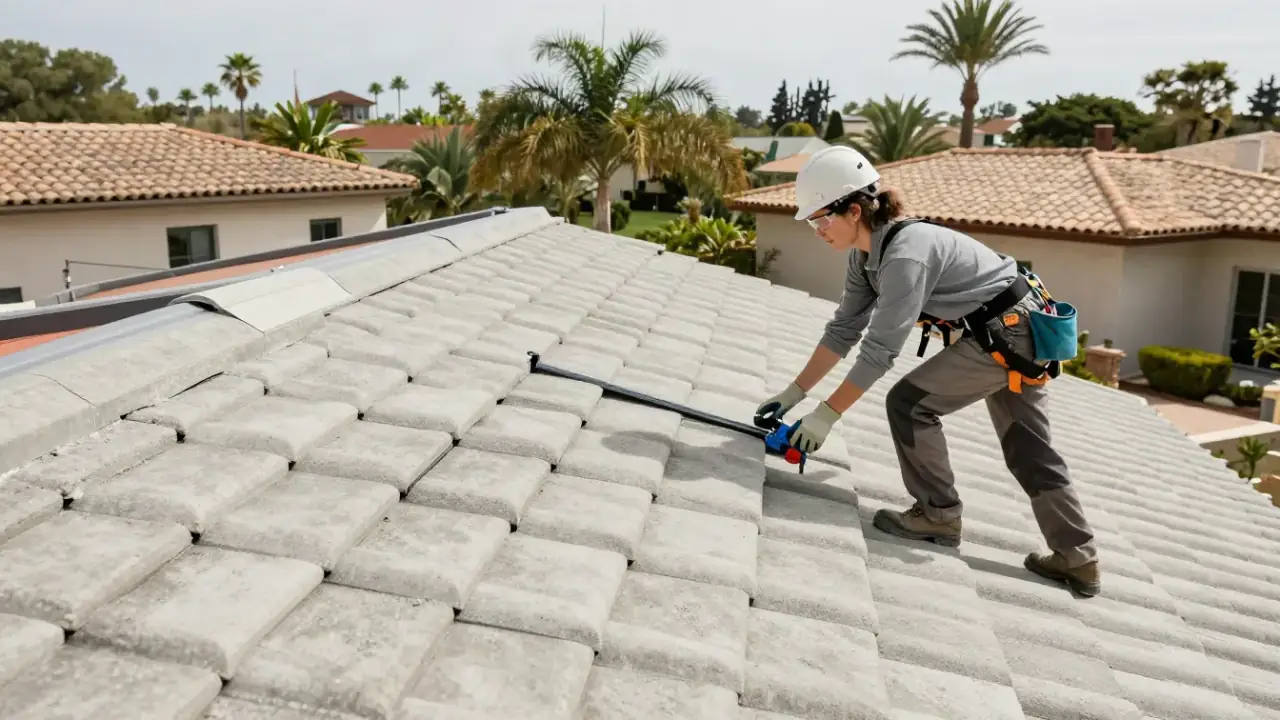
Foam adhesive is the better choice for most tile re-securing jobs in Delray Beach, and mortar is the better choice when you're resetting ridge, hip, or field tiles that need a rigid bed. Foam wins on speed, flexibility, and cost for spot repairs; mortar wins on structural resetting and long-term bond where tiles meet at angles. The rest of this post breaks down exactly when each method applies, what they cost in 2026, and how South Florida's heat, salt air, and hurricane season change the math.
We run tile re-securing calls across Delray Beach every week, from Tile Roof Repair in Lake Ida to the beachside streets, and the foam-versus-mortar question comes up on almost every estimate. Here's how we actually decide.
The Short Answer: Foam Adhesive vs Mortar for Tile Re-Securing
Tile re-securing foam adhesive vs mortar comes down to one question: does the tile need to move slightly with the roof, or does it need to be locked rigid to a substrate? Foam adhesive is a polyurethane-based bonding foam that expands into the gap between tile and underlayment, cures in about 30 to 60 minutes, and stays slightly flexible for the life of the roof. Mortar is a cement-and-sand mix that sets hard, bonds tile to tile and tile to ridge, and takes 24 to 72 hours to fully cure depending on humidity.
On a 2026 Delray Beach roof, that difference matters because our daily temperature swings from a 90°F afternoon to a 74°F overnight in summer, and tile expands and contracts with every cycle. Rigid mortar joints crack under that movement. Foam absorbs it.
What Tile Re-Securing Actually Means on a Delray Beach Roof
Tile re-securing is the process of reattaching roof tiles that have slipped, lifted, cracked loose, or lost their original mechanical fastener so they no longer resist wind uplift. It is not the same as a re-roof, and it is not the same as replacing underlayment. It's the targeted fix you do when tiles are still sound but no longer anchored.
Most Delray Beach homes built between 1975 and 2005 have concrete or clay barrel tile set on a batten system or a mortar-set bed. After 20 to 30 years, the original nails corrode, the mortar bed dries and powders, and tiles start to chatter in a 40 mph gust. That's the moment re-securing pays for itself - one loose tile becomes three, then a leak, then a ceiling stain.
If you're already seeing water inside, the job is bigger than re-securing. Our Tile Roof Leak Repair Delray Beach FL team traces the entry point first, because re-securing a tile over a failed underlayment just hides the problem.
How Foam Adhesive Re-Securing Works
Foam adhesive re-securing works by injecting a two-part polyurethane foam under the lifted tile, where it expands to fill the void and bonds the tile to the underlayment or the tile below it. The foam reaches full cure in under an hour at 75°F and stays pliable from roughly -20°F to 200°F, which covers every temperature Delray Beach will ever throw at it.
Here's what the process looks like on a typical job:
- We lift the loose tile and clear out old mortar dust, broken nail heads, and debris.
- We check the underlayment underneath - if it's torn or brittle, it gets patched before anything is bonded.
- We inject foam adhesive at three to four points along the tile's underside.
- We press the tile down, confirm it sits flush with its neighbors, and hold it for 30 to 60 seconds while the foam kicks.
- We come back after cure and tug-test the tile by hand.
Foam is also the standard method for re-securing individual tiles after a storm. When you need Hurricane Damage Tile Repair Delray Beach FL fast, foam lets us reattach dozens of tiles in a single afternoon instead of waiting on mortar cure times.
Where Foam Adhesive Excels
- Spot re-securing of one to fifty field tiles.
- Emergency storm repairs where you can't wait 48 hours for mortar.
- Roofs with slight substrate movement or older batten systems.
- Tiles that need to stay removable for future underlayment work.
How Mortar Re-Securing Works
Mortar re-securing works by bedding tiles into a fresh cement-and-sand mix that hardens into a rigid bond, most often along ridges, hips, and the first course at the eave. A typical mix is one part Portland cement to three parts sand, sometimes with an acrylic additive for better adhesion in coastal air. Full cure takes 24 to 72 hours.
Mortar is the right call when the original roof was mortar-set and you're resetting a whole run of tiles, not just one. It's also what we use on ridge and hip caps, because those tiles take direct wind load and need a mechanical-plus-mortar bond. If your ridge line is the problem, that's a different scope - see our Ridge and Hip Tile Re-Securing Delray Beach FL page for how we handle it.
Where Mortar Excels
- Ridge, hip, and valley tile resets.
- Full mortar-bed restorations on pre-1990 roofs.
- Eave and rake edge tiles that need a rigid seat.
- Anywhere the original roof was built with a mortar bed and you want to match it.
Foam Adhesive vs Mortar: Side-by-Side Comparison
Foam adhesive and mortar differ on cure time, flexibility, cost per tile, and how they handle South Florida's wind and heat. Here's the honest comparison we give homeowners on every estimate.
- Cure time: Foam 30-60 minutes; mortar 24-72 hours.
- Flexibility: Foam stays slightly flexible; mortar sets rigid and cracks under movement.
- Cost per tile (2026): Foam $15-$30 installed; mortar $25-$45 installed.
- Wind performance: Both can meet Florida's wind-uplift requirements when installed correctly; foam is easier to verify on spot repairs.
- Removability: Foam tiles can be pried up for future work; mortar tiles often break.
- Best use: Foam for field tiles and storm repairs; mortar for ridges, hips, and full resets.
Neither method is "better" in a vacuum. The right answer depends on which tiles are loose and why. If you're not sure, a Tile Roof Inspection Delray Beach FL tells you exactly what's moving and what's still solid.
Which Method Is Better for Delray Beach's Climate?
Foam adhesive holds up better than mortar in Delray Beach's heat, humidity, and salt air for field tile re-securing, while mortar remains the standard for ridge and hip work. Our climate is brutal on rigid cement joints - afternoon thunderstorms drop surface temps 20 to 30 degrees in minutes, and that thermal shock cracks mortar that was fine in April.
Salt air is the second factor. Homes within a mile of the beach, including most of the Seagate Tile Roof Repair area, see faster corrosion on nails and faster drying on mortar beds. Foam doesn't care about salt; it's a sealed polyurethane. Mortar needs an acrylic additive and a sealer to survive here long-term.
Hurricane season is the third factor. Between June and November, a single 100 mph gust can lift every poorly secured tile on the windward slope. Foam re-securing done before the season starts is the cheapest insurance you can buy on a tile roof.
Tile Re-Securing Cost in Delray Beach FL (2026)
Tile re-securing in Delray Beach runs $15 to $45 per tile in 2026, depending on method, roof pitch, and access. A typical spot repair of 10 to 20 tiles lands between $300 and $700. A full-slope foam re-securing on a 2,000 sq ft roof runs $1,800 to $3,500.
What drives the number:
- Method: Foam is cheaper per tile than mortar.
- Access: Two-story or steep-pitch roofs add labor.
- Tile condition: Cracked tiles need replacement, not just re-securing - that's a Broken and Cracked Tile Repair Delray Beach FL job.
- Underlayment: If it's failed, re-securing alone won't stop leaks.
We quote the whole job up front so you know the number before we start. No surprise line items after the fact.
Common Mistakes We See on Delray Beach Tile Roofs
The most common tile re-securing mistake in Delray Beach is bonding a tile back down without checking why it lifted in the first place. Loose tiles are a symptom. The cause is usually a corroded nail, a cracked underlayment, or a batten that's rotted through.
Other mistakes we fix regularly:
- Using construction adhesive from a caulk gun instead of proper roofing foam - it fails within two summers.
- Piling mortar on top of a tile instead of bedding it underneath.
- Re-securing tiles over a torn underlayment, which guarantees a leak.
- Skipping the ridge and hip caps because they're hard to reach.
- Walking the roof in the wrong pattern and cracking tiles that were fine.
If your roof is over 20 years old and you've never had it inspected, the re-securing conversation should start with an inspection, not a tube of adhesive.
When to Call a Professional
Call a professional when tiles are loose above a living space, when you can see daylight through the roof deck, or when more than a handful of tiles have moved. Tile re-securing looks simple from the ground and is genuinely dangerous on a two-story barrel tile roof - one wrong step cracks a $30 tile and one wrong bond causes a leak you won't find for months.
Delray Beach Tile Roof Repair handles foam and mortar re-securing across the city, from single-tile storm repairs to full-slope resets. We'll tell you honestly which method your roof needs and what it costs before we start.
Frequently Asked Questions
Is foam adhesive or mortar better for tile re-securing in Delray Beach?
Foam adhesive is better for field tile spot repairs in Delray Beach because it cures in under an hour and stays flexible through our heat cycles. Mortar is better for ridge, hip, and full-bed resets where a rigid bond is required. Most roofs need both methods in different places.
How long does foam adhesive last on roof tiles in Delray Beach FL?
Properly applied roofing foam adhesive lasts 15 to 25 years on a Delray Beach roof. It's UV-stable once cured and unaffected by salt air. The tile or the underlayment usually fails before the foam does.
Can I use mortar to re-secure roof tiles in South Florida?
Yes, mortar works in South Florida, but it needs an acrylic additive and a sealer to survive our heat and salt air. Plain mortar without additives cracks within 5 to 10 years here. We use modified mortar on every ridge and hip job.
What is the best way to re-secure tile roofs in Delray Beach?
The best method is the one that matches the failure. Loose field tile gets foam. Ridge and hip caps get modified mortar over a mechanical fastener. Full-slope failures get a re-roof, not re-securing. An inspection tells you which one you're facing.
How much does tile re-securing cost in Delray Beach FL?
In 2026, expect $15 to $45 per tile installed. A 10-tile spot repair runs $300 to $700. Full-slope foam re-securing on a 2,000 sq ft roof runs $1,800 to $3,500. Cracked tiles and underlayment work add to the total.
Get Help With Tile Roof Repair in Delray Beach
If your tiles are lifting, chattering in the wind, or you're not sure whether foam or mortar is the right fix, we'll come out, get on the roof, and tell you straight.
Call Delray Beach Tile Roof Repair at (561) 342-0635 to schedule your re-securing estimate.