What to Expect During a Tile Roof Inspection
A tile roof inspection in Delray Beach takes 45 to 90 minutes and covers tiles, underlayment, flashing, valleys, and attic decking. Here is exactly what happens, step by step.
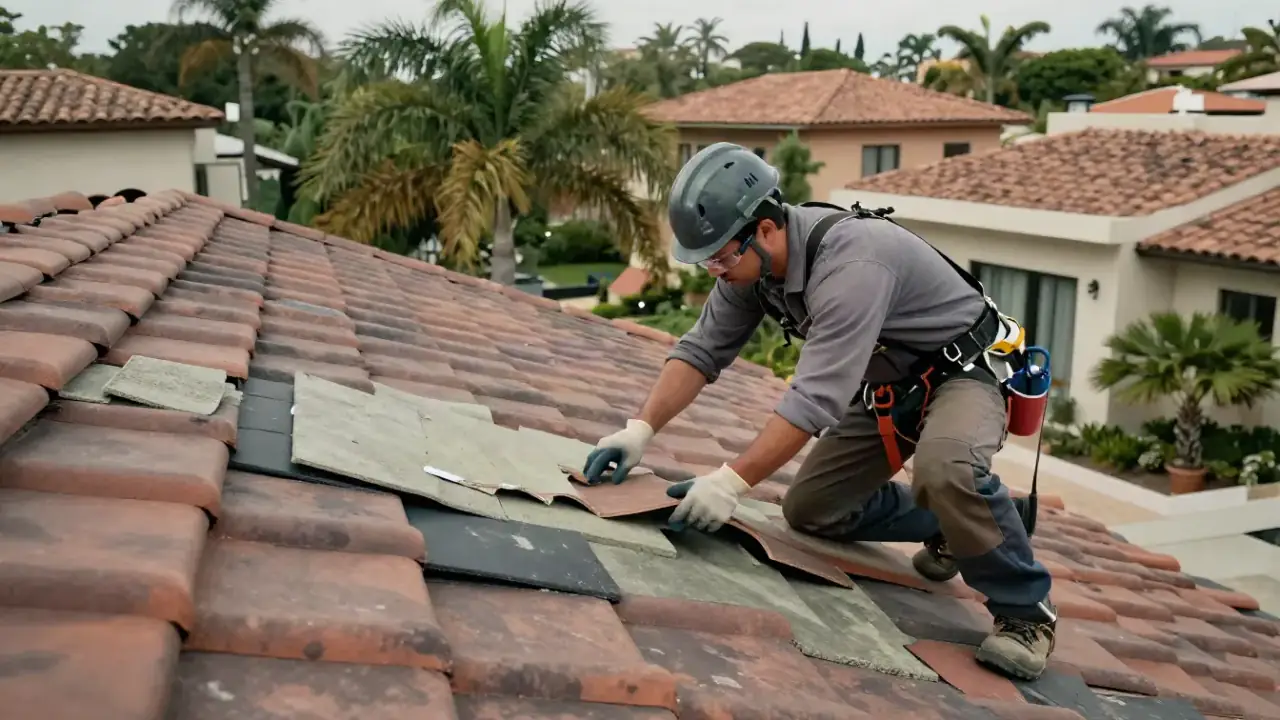
A tile roof inspection in Delray Beach is a 45-to-90-minute, top-to-bottom assessment of your roof covering, underlayment, flashing, valleys, and attic decking - done from the ground, the roof surface, and inside the attic. You should expect a written report with photos, a condition rating for each component, and a clear list of anything that needs repair now versus what to monitor. The inspection itself is non-invasive; nobody pulls tiles unless you approve a repair.
That is the short answer. The rest of this post walks you through the actual sequence of a professional roof inspection in Delray Beach, what we look at and why, what it costs in 2026, and the red flags that tell you to book one sooner rather than later.
What Happens First: The Walk-Up and Exterior Survey
The tile roof inspection process in Delray Beach starts before anyone climbs a ladder. Our inspector walks the perimeter of the house, checks the ground for fallen tile fragments, and looks at the roof from every angle - front, sides, and rear. Barrel tile and flat concrete tile both shed pieces when fasteners corrode, so a scattering of tile shards in the grass or along the driveway is often the first clue that something is loose up top.
From there we check the fascia, soffit, and drip edge for water staining, then look at the valley lines and any penetrations - vents, satellite mounts, solar conduit, chimney stacks. In Delray Beach, the salt air and the afternoon thunderstorms that roll in from the west between May and October punish metal components faster than most homeowners expect. A flashing collar that looked fine three years ago can be rusted through by the time the next wet season arrives.
We also note the roof's age and pitch. Most tile roofs in this area were installed with a 30-year underlayment, and the tile itself can last 50 years or more. The underlayment is what fails first. If your roof is 18 to 25 years old, the exterior survey usually tells us whether the underlayment is still doing its job or whether it is time to plan for Underlayment Replacement Delray Beach FL.
How Long Does a Tile Roof Inspection Take in Delray Beach?
A standard tile roof inspection takes 45 to 90 minutes for a single-family home on a typical Delray Beach lot. Add 20 to 30 minutes if the roof has multiple levels, a steep pitch, or a complicated valley layout. A small condo or villa roof can be done in 30 to 45 minutes.
Here is how that time breaks down:
- Ground and exterior survey: 10-15 minutes
- Roof surface walk: 20-35 minutes
- Attic and decking check: 15-25 minutes
- Photo documentation and report write-up: 15-20 minutes
We do not rush the attic portion. That is where the real evidence lives - water stains on the decking, daylight coming through a gap, rusted nail heads, or a soft spot in the plywood that tells us moisture has been sitting there for a while. If you have ever wondered how long does a tile roof inspection take in Delray Beach, the honest answer is that the report matters more than the clock. A 30-minute inspection that skips the attic is not an inspection; it is a glance.
If you are scheduling around work or a family calendar, book a morning slot. Roofs are cooler before 11 a.m., and inspectors can move faster and safer on a surface that is not radiating 140-degree heat.
The Tile Roof Inspection Checklist We Work Through
Every inspection follows the same tile roof inspection checklist in Delray Beach, because skipping a step is how problems get missed. Here is what we check, in order.
1. Tile Condition and Fasteners
We look for cracked, slipped, or missing tiles, and we check whether the remaining tiles are still fastened. On older roofs, the wire ties and nails that hold tiles in place corrode long before the tile itself wears out. A tile that slides out of position after a storm is usually a fastener problem, not a tile problem.
2. Underlayment
The underlayment is the waterproof membrane beneath the tile. We check it at the eaves, in the valleys, and around penetrations - the three places it fails first. Brittle, cracked, or visibly worn underlayment means the roof is running on borrowed time, even if the tile looks perfect from the street.
3. Flashing and Valleys
Flashing is the metal that seals roof joints - walls, chimneys, vents, and skylights. Valleys are the V-shaped channels where two roof planes meet. Both are leak magnets. We check for lifted, rusted, or improperly lapped metal, and we look for debris or granule buildup in the valleys that can dam water back up under the tile.
4. Ridge and Hip Tiles
Ridge and hip tiles take the most wind load during a hurricane. We check the mortar or foam adhesive holding them down, and we look for hairline cracks that let water in behind the tile.
5. Attic and Decking
Inside the attic, we look for water stains, mold, daylight, and soft decking. We also check the underside of the roof sheathing around valleys and penetrations, since that is where leaks show up first.
6. Drainage and Gutters
We confirm water has a clear path off the roof. Clogged gutters and blocked valleys push water sideways under the tile, which is one of the most common causes of leaks we see on Tile Roof Repair in Pineapple Grove, where mature oaks drop leaves onto low-slope roof sections every fall.
What Does a Roof Inspector Look For in South Florida?
A roof inspector in South Florida looks for the specific damage patterns that our climate creates: UV-degraded underlayment, rusted fasteners and flashing, wind-lifted ridge tiles, and hairline cracks from thermal expansion. Those four issues cause the majority of tile roof leaks in Palm Beach County.
The climate here is hard on roofs in ways that inspectors from other states do not always account for. Surface temperatures on a dark tile roof in Delray Beach can hit 150°F in July, then drop 60 degrees during an afternoon storm. That expansion and contraction cycle, repeated thousands of times over 20 years, opens seams and loosens fasteners.
Salt air is the second factor. Homes east of the Intracoastal - Seagate, Tropic Isle, and the barrier neighborhoods - see faster corrosion on flashing, valley metal, and tile fasteners than homes further inland. If your roof is within a mile of the ocean, we shorten the recommended inspection interval by a year or two.
Hurricane season runs June 1 through November 30. We recommend an inspection before the season starts and again after any named storm passes within 50 miles. Wind damage is often invisible from the ground - a lifted ridge tile or a shifted field tile can sit quietly until the next heavy rain finds the gap.
What to Watch Out For: Common Mistakes Homeowners Make
The biggest mistake we see is treating a tile roof like an asphalt shingle roof. They fail differently. Shingles wear out from the top down; tile roofs fail from the underlayment up. A homeowner who only looks at the tile will miss the real problem until water is dripping into the living room.
Other mistakes worth avoiding:
- Walking the roof yourself. Tile is brittle underfoot, and a cracked tile from a DIY inspection costs more to fix than the inspection itself.
- Pressure washing. High-pressure water drives under the tile and destroys the underlayment. If your roof needs cleaning, it needs soft washing - see Tile Roof Cleaning Delray Beach FL.
- Ignoring small cracks. A hairline crack in a ridge tile lets in a surprising amount of water over a wet season.
- Patching over a leak. Sealant smeared on a leak without finding the source just moves the water somewhere else.
- Skipping the report. A verbal "looks fine" is not documentation. You want photos and a written condition summary you can compare against next year.
One more: do not wait for a leak to book an inspection. By the time water is coming through the ceiling, the underlayment has usually been failing for a year or more, and the repair is bigger and more expensive than it needed to be.
When to Call a Professional
Call a professional when you see cracked or missing tiles, water stains on the ceiling or attic decking, granules collecting in the gutters, or when your roof crosses the 15-year mark. Those are the signals that a trained eye needs to be on the roof.
We handle Tile Roof Inspection Delray Beach FL for homeowners across the city, from the historic blocks near Old School Square to the newer communities out west. If you are not sure whether your roof needs a repair or just a check-up, we will tell you straight - no upsell, no pressure. Our team also handles Tile Roof Repair in Boynton Beach and the surrounding communities, so if you are just north of us, we can get to you quickly.
If you would rather talk it through first, give us a call and describe what you are seeing. Half the time we can tell you over the phone whether it is worth a visit.
Frequently Asked Questions
What should I expect during a tile roof inspection in Delray Beach?
Expect a 45-to-90-minute visit covering the exterior, roof surface, and attic. The inspector checks tile condition, underlayment, flashing, valleys, ridge tiles, and decking, then gives you a written report with photos and a repair list. Nothing is removed or repaired without your approval.
How long does a tile roof inspection take in Delray Beach FL?
Most single-family homes take 45 to 90 minutes. Larger or steeper roofs can take up to two hours. The attic portion adds 15 to 25 minutes and should never be skipped - that is where leak evidence shows up first.
What does a roof inspector check for in South Florida?
UV-degraded underlayment, rusted fasteners and flashing, wind-lifted ridge tiles, cracked tiles, and water stains in the attic. Salt air near the coast accelerates corrosion, and afternoon storms stress the roof through heat expansion. Inspectors also check valleys and drainage for debris.
How often should I get a tile roof inspection in Delray Beach?
Every two years for roofs under 15 years old, and annually once your roof passes 15 years. Add an inspection after any named storm and before each hurricane season. Coastal homes within a mile of the ocean should be inspected every year regardless of age.
How much does a tile roof inspection cost in Delray Beach in 2026?
Typical 2026 pricing in this area runs $200 to $450 for a full residential inspection with a written report. Some companies credit the fee toward repair work. Be cautious of free inspections that come with a same-day pressure to re-roof.
Get Help with Tile Roof Repair in Delray Beach
If your inspection turns up cracked tiles, worn underlayment, or a leak you have been putting off, we can take care of it. Delray Beach Tile Roof Repair handles inspections, repairs, and full restorations across the city and the surrounding communities.
Call (561) 342-0635 to schedule your tile roof inspection or to ask a question about what we found on your roof.