Why Tile Roofs Leak Even When the Tiles Look Fine
Your tiles look perfect but water is still coming in. Here is why tile roofs leak even when the tiles look fine in Delray Beach, FL, and what to do about it.
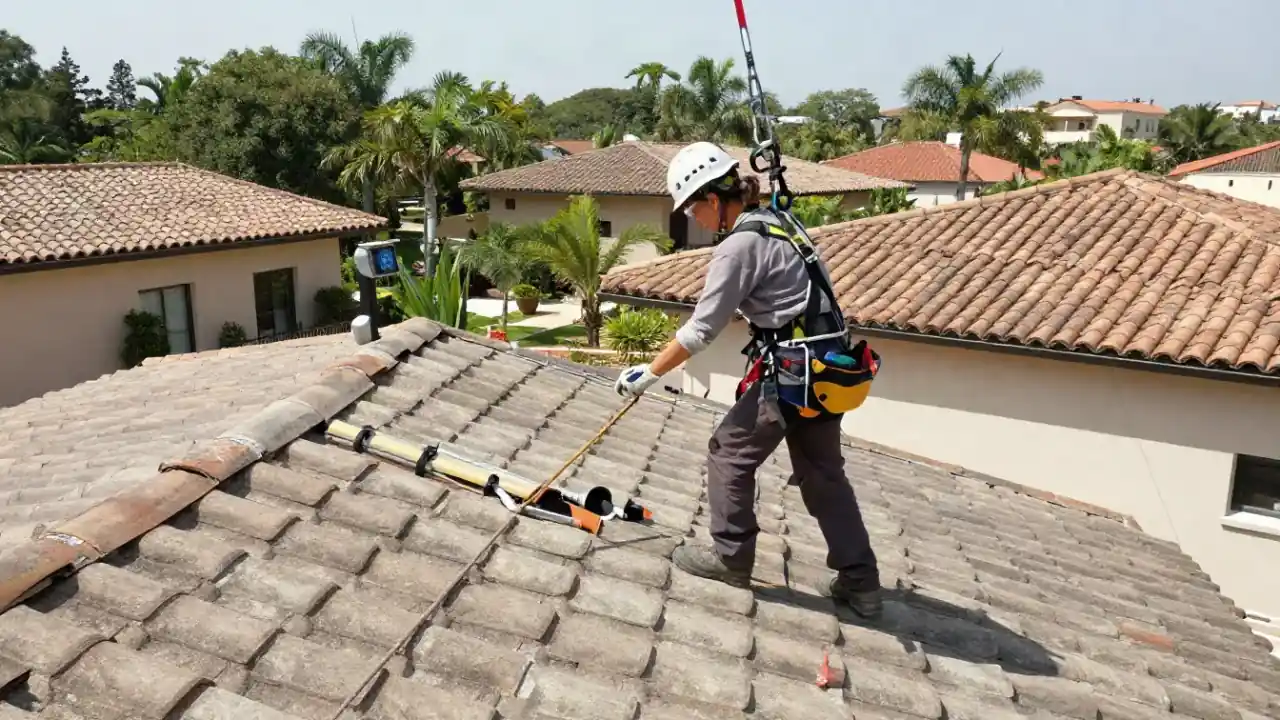
Your tile roof can leak even when every tile looks perfectly fine because the tiles are not the waterproof layer. The actual water barrier is the underlayment beneath them, and it fails long before the tiles do. In Delray Beach, that underlayment takes a beating from sun, salt air, and driving rain, so a roof that looks solid from the street can be leaking into your attic right now. This post explains the real causes, how to spot hidden leaks, and what it takes to fix them.
The Tile Is Not the Roof
Concrete and clay tiles are the armor, not the raincoat. They shed most water, but wind-driven rain pushes sideways under them, and that water has to go somewhere. It lands on the underlayment - a felt or synthetic membrane - and drains down to the eave. When that membrane is intact, you stay dry. When it is not, you get leaks no matter how good the tiles look.
Most tile roofs in Delray Beach are built with a 30-pound felt or a self-adhered synthetic underlayment. Felt lasts about 15 to 20 years in South Florida before it dries out and tears. Synthetic underlayment can stretch to 25 or 30 years, but only if it was installed correctly and the roof has been maintained. Once it fails, water finds every nail hole and seam.
That is why we tell homeowners to think of the tile as a hat and the underlayment as the roof itself. If you are seeing stains on your ceiling but no broken tiles, the problem is almost always underneath.
Why Does My Tile Roof Leak When the Tiles Look Fine in Delray Beach?
Your tile roof leaks when the tiles look fine in Delray Beach because the leak is coming from the underlayment, flashing, or penetrations - not the tile surface. The tiles are doing their job; the layers below them are not. Here is what we find most often.
Underlayment failure
This is the number one cause. The underlayment gets brittle from attic heat that regularly hits 130°F to 150°F in July and August. It cracks, tears around fasteners, and loses its water resistance. Water then drips straight through to your drywall.
Flashing and valley problems
Flashing is the metal that seals roof transitions - walls, chimneys, skylights, and valleys where two roof planes meet. Even a small gap or a lifted edge lets water in. In Delray Beach, we see a lot of rusted flashing on older homes near the Intracoastal, where salt air speeds up corrosion.
Broken or cracked tiles you cannot see
A tile can crack on the backside or under a ridge cap and still look intact from the ground. Those hairline cracks let water through, and once it is under the tile, the underlayment has to handle it. If the underlayment is already weak, that is your leak.
Ridge and hip tile movement
Ridge and hip tiles take the most wind. After a storm, they can shift just enough to break the seal. Water gets in at the ridge and travels down the underlayment until it finds a gap. You will often see the stain on the ceiling far from the actual leak.
Clogged valleys and debris
Valleys collect leaves, pine needles, and roof grit. When they clog, water backs up under the tiles and finds its way in. This is common on homes with oak or palm trees nearby.
The Usual Suspects Behind Hidden Tile Roof Leaks in Delray Beach FL
Hidden tile roof leaks in Delray Beach FL usually trace back to one of five things: failed underlayment, bad flashing, cracked tiles, loose ridge tiles, or clogged valleys. We have repaired thousands of tile roofs across Palm Beach County, and these are the culprits in nearly every case.
Here is a quick breakdown of what we see and how often:
- Underlayment failure: about 70% of the leaks we diagnose on roofs older than 15 years.
- Flashing issues: roughly 15% - especially around chimneys and wall intersections.
- Cracked or broken tiles: about 10%, often from foot traffic or hail.
- Ridge and hip tile movement: around 5%, usually after a named storm.
If your roof is 15 to 20 years old and you have never replaced the underlayment, that is the first thing we check. You can read more about our Tile Roof Leak Repair Delray Beach FL process if you want the full picture.
How South Florida Weather Ages a Tile Roof
South Florida weather ages a tile roof from the inside out. The combination of intense sun, salt air, and heavy rain breaks down underlayment and flashing faster than in almost any other climate. Delray Beach sits right in that zone.
Summer attic temperatures routinely exceed 140°F. That heat bakes the underlayment until it loses flexibility. Then the afternoon thunderstorms dump 1 to 2 inches of rain in under an hour, and the roof has to shed it fast. If the underlayment is already brittle, it tears.
Salt air is the other factor. Homes east of Federal Highway, especially in neighborhoods like Seagate Tile Roof Repair, see faster corrosion on flashing and fasteners. We often find rusted nails that have backed out, leaving holes in the underlayment.
Hurricane season runs June through November. Even a near-miss can lift ridge tiles and drive water into places it should not go. After every named storm, we get calls from homeowners who cannot find a single broken tile but have water stains on the ceiling.
How Do You Find Hidden Tile Roof Leaks in Delray Beach FL?
Finding hidden tile roof leaks in Delray Beach FL takes more than a visual inspection from the ground. We use a systematic approach that includes attic inspection, water testing, and sometimes thermal imaging. The goal is to trace the water back to its entry point, not just the stain on your ceiling.
Here is how we do it:
- Attic inspection: We look for water stains, mold, and daylight. Stains often appear far from the actual leak because water travels along rafters.
- Roof surface check: We examine every tile, flashing point, and valley. We also check ridge and hip tiles for movement.
- Water test: If needed, we run water over suspect areas and watch where it shows up inside.
- Thermal imaging: On complex roofs, an infrared camera can spot moisture behind walls and ceilings without tearing anything apart.
Once we find the source, we give you a clear plan. Sometimes it is a simple flashing repair. Other times it means replacing the underlayment in that section. We will tell you straight.
Common Mistakes Homeowners Make With a Leaking Tile Roof
The biggest mistake is assuming the tiles are the problem and trying to seal them from the outside. That rarely works because the water is already getting underneath. Here are other missteps we see.
- Caulking over cracks: Caulk is a temporary patch at best. It dries out and cracks within a year in our heat.
- Ignoring small stains: A small ceiling stain today can be a soaked attic and mold tomorrow. Fix it early.
- Hiring a handyman for underlayment: Underlayment replacement is a skilled trade. Done wrong, it voids warranties and can lead to bigger leaks.
- Pressure washing the roof: High pressure can crack tiles and force water under them. Use a soft wash instead.
- Waiting until the rainy season: Schedule repairs in the dry months (December through May) to avoid delays and further damage.
If you have already made one of these mistakes, do not worry. We can usually fix it. But the sooner you call, the less damage you will deal with.
When to Call a Professional
Call a professional when you see water stains, mold, or daylight in the attic - or when your roof is over 15 years old and has never had underlayment replaced. Those are the signs that the hidden layers are failing.
At Delray Beach Tile Roof Repair, we specialize in tile roof leak repair and underlayment replacement. We know exactly where these roofs fail in Delray Beach, and we fix them right the first time. If you are not sure, we offer a thorough Tile Roof Inspection Delray Beach FL that will tell you what is going on.
We also handle Underlayment Replacement Delray Beach FL for roofs where the membrane has reached the end of its life. It is a big job, but it is far cheaper than replacing the whole roof - and it stops the leaks.
Frequently Asked Questions
Why does my tile roof leak when the tiles look fine in Delray Beach?
Because the tiles are not the waterproof layer. The underlayment beneath them fails after 15 to 20 years in South Florida heat, letting water through even when every tile looks intact. Flashing and valley issues can also cause leaks without any visible tile damage.
Can a tile roof leak without broken tiles in South Florida?
Absolutely. In fact, most leaks we see in South Florida have no broken tiles at all. The cause is usually underlayment failure, rusted flashing, or loose ridge tiles. The tiles do their job; the layers below them do not.
How do you find hidden tile roof leaks in Delray Beach FL?
We start with an attic inspection to trace water stains, then check the roof surface for flashing and underlayment issues. If needed, we use water testing or thermal imaging. The goal is to find the entry point, not just the ceiling stain.
What causes tile roof leaks in Delray Beach?
The top causes are underlayment failure (about 70% of cases), flashing problems (15%), cracked tiles (10%), and ridge tile movement (5%). Clogged valleys and debris also contribute. Age and South Florida weather are the underlying factors.
How much does tile roof leak repair cost in Delray Beach in 2026?
Minor repairs like flashing or a few tiles typically run $300 to $800. Underlayment replacement for a section can be $1,500 to $4,000. Full underlayment replacement on a 2,000-square-foot roof ranges from $8,000 to $15,000, depending on access and materials.
Get Help With Tile Roof Repair in Delray Beach
If your tile roof is leaking and you cannot see why, we can find the source and fix it. Delray Beach Tile Roof Repair serves homeowners across Delray Beach and the surrounding areas. Call us at (561) 342-0635 to schedule your inspection.